

Building the Future of Fandom on BBC iPlayer
Client
BBC
Overview
As audiences increasingly move between franchises, live events, curated collections and cultural moments, we saw an opportunity to rethink what a “destination” could be on BBC iPlayer.
Across Attenborough at 100, Films, the World Cup, The Traitors and other experiences, we began developing richer, more flexible spaces designed around exploration rather than traditional catalogue structures.
What began as a project about pages gradually became a much broader exploration of how discovery across iPlayer could work as a connected system.
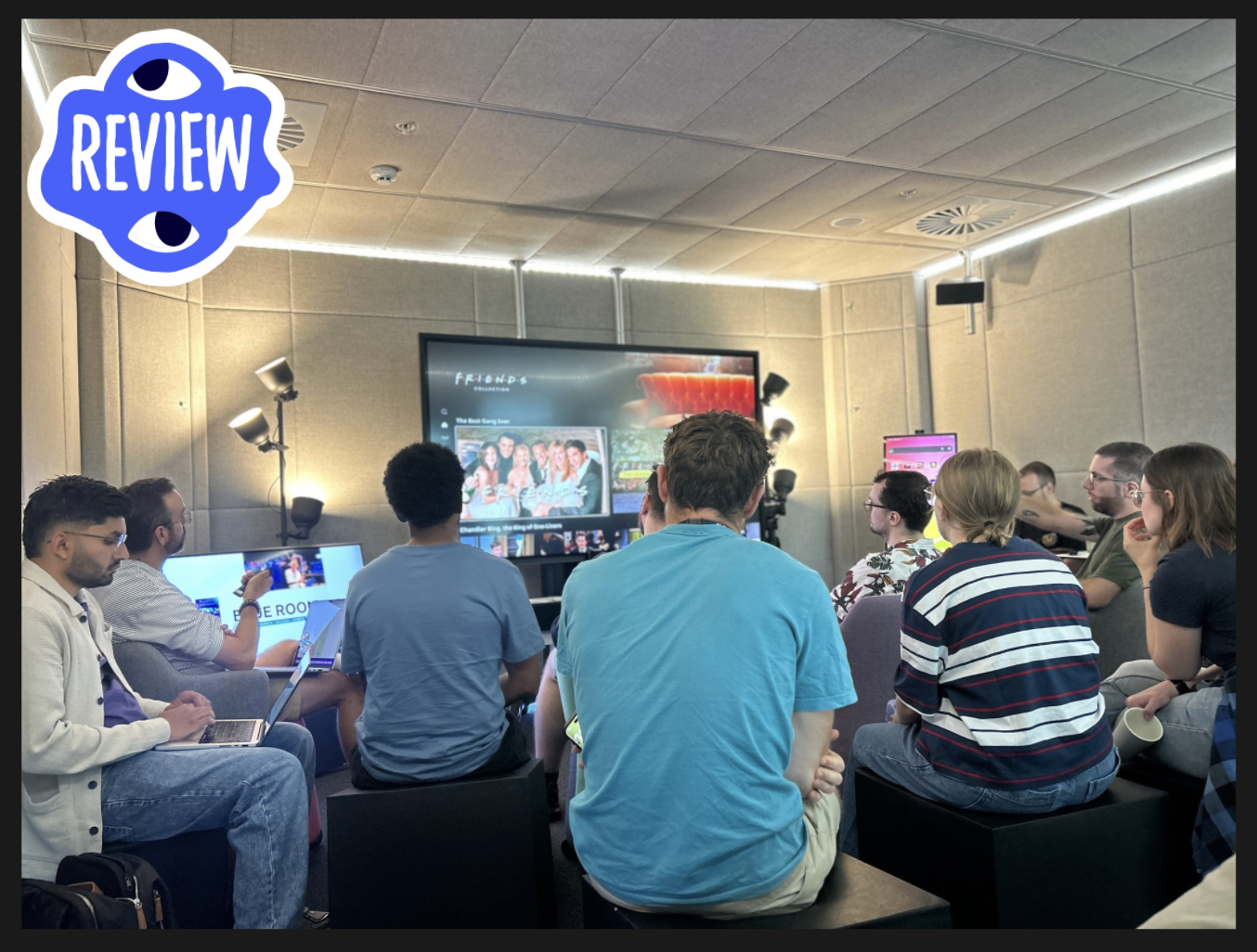
Responsibilities:
Creative Direction and Design Strategy
Product Vision and Experience Definition
Discovery and Research Leadership
Information Architecture and Navigation Strategy
Experimentation and Product Validation
Cross-platform Experience Thinking
Stakeholder Alignment across Editorial, Product and Engineering
Next Gen Destinations and Routes Into Discovery
How did we get here?
In 2025, we began by exploring how audiences expected iPlayer's different discovery spaces to work — from genres and collections to channels and franchises.
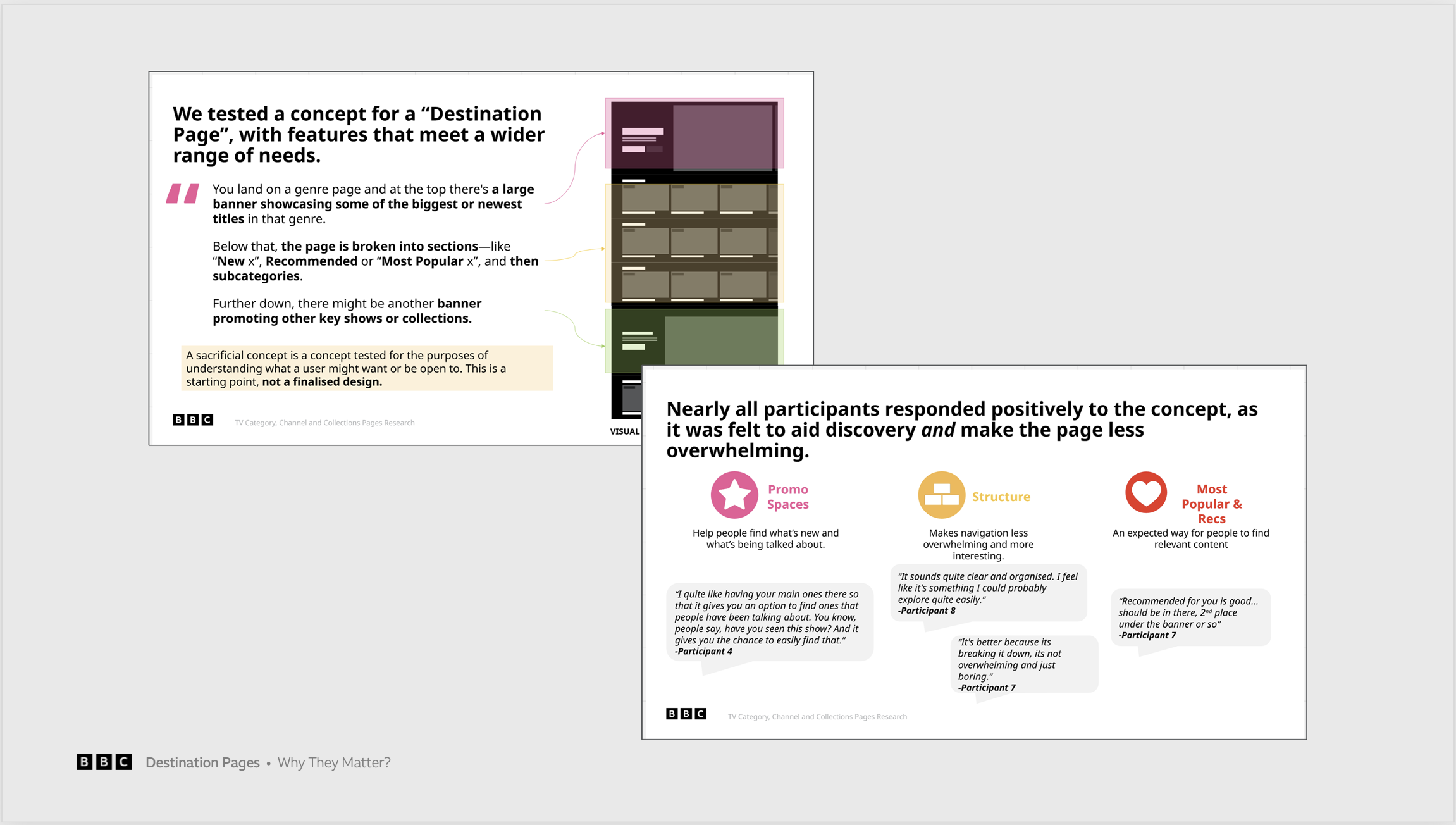
Through nine in-depth interviews and a 100-person card sort, we explored audience mental models, expectations around page structure and how people wanted to move into and around these spaces.
One of the clearest learnings was simple:
People don't want to work to discover content; they want discovery to work for them.
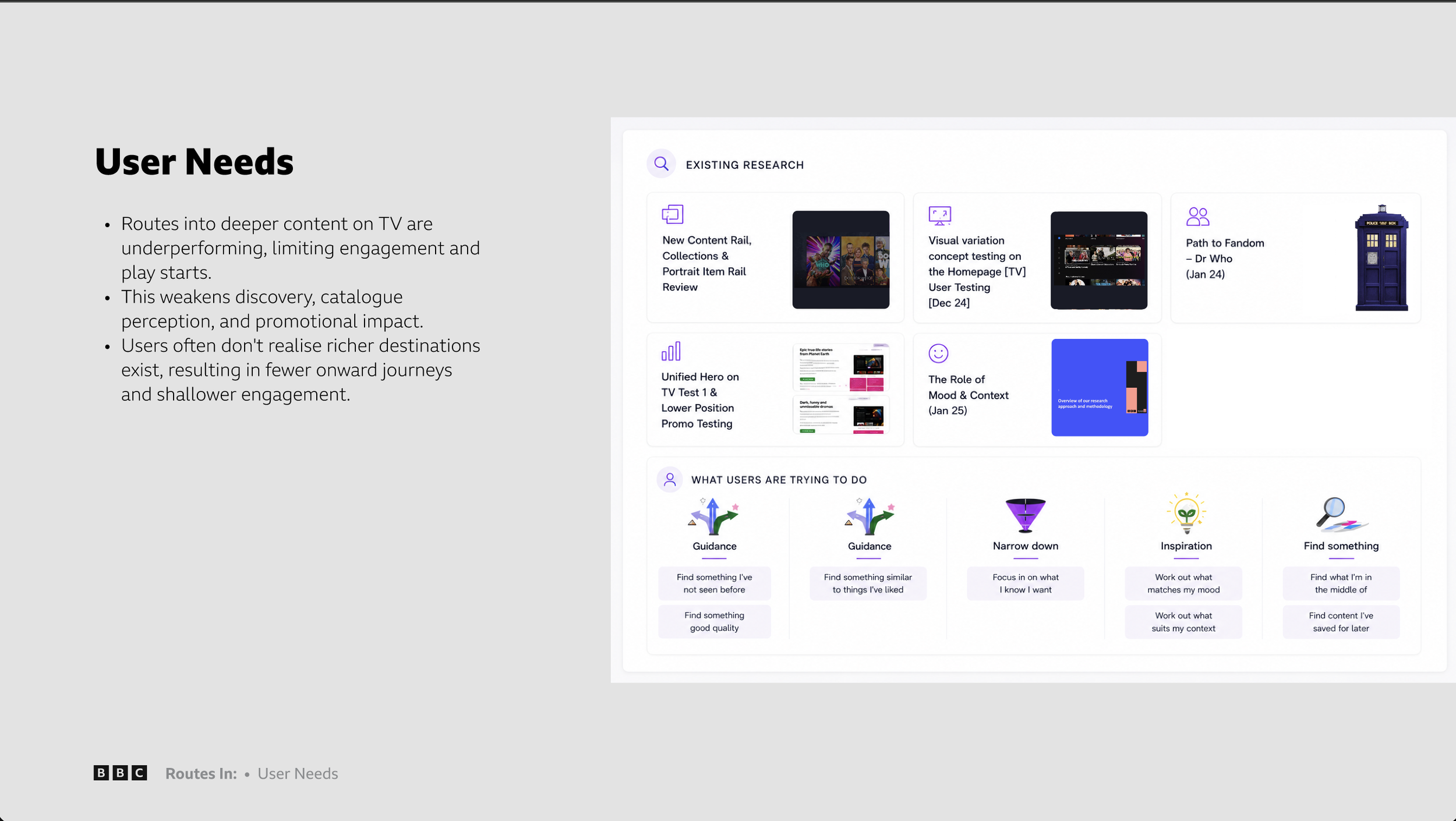
Audiences wanted simple, guided ways to narrow their choices without feeling overwhelmed. They wanted clearer routes into the things they cared about, timely and relevant content, and enough context to feel confident exploring something unfamiliar.
This was particularly important for younger and underserved audiences. The challenge wasn't simply exposing more of the BBC catalogue — it was making its breadth understandable, relevant and worth exploring.
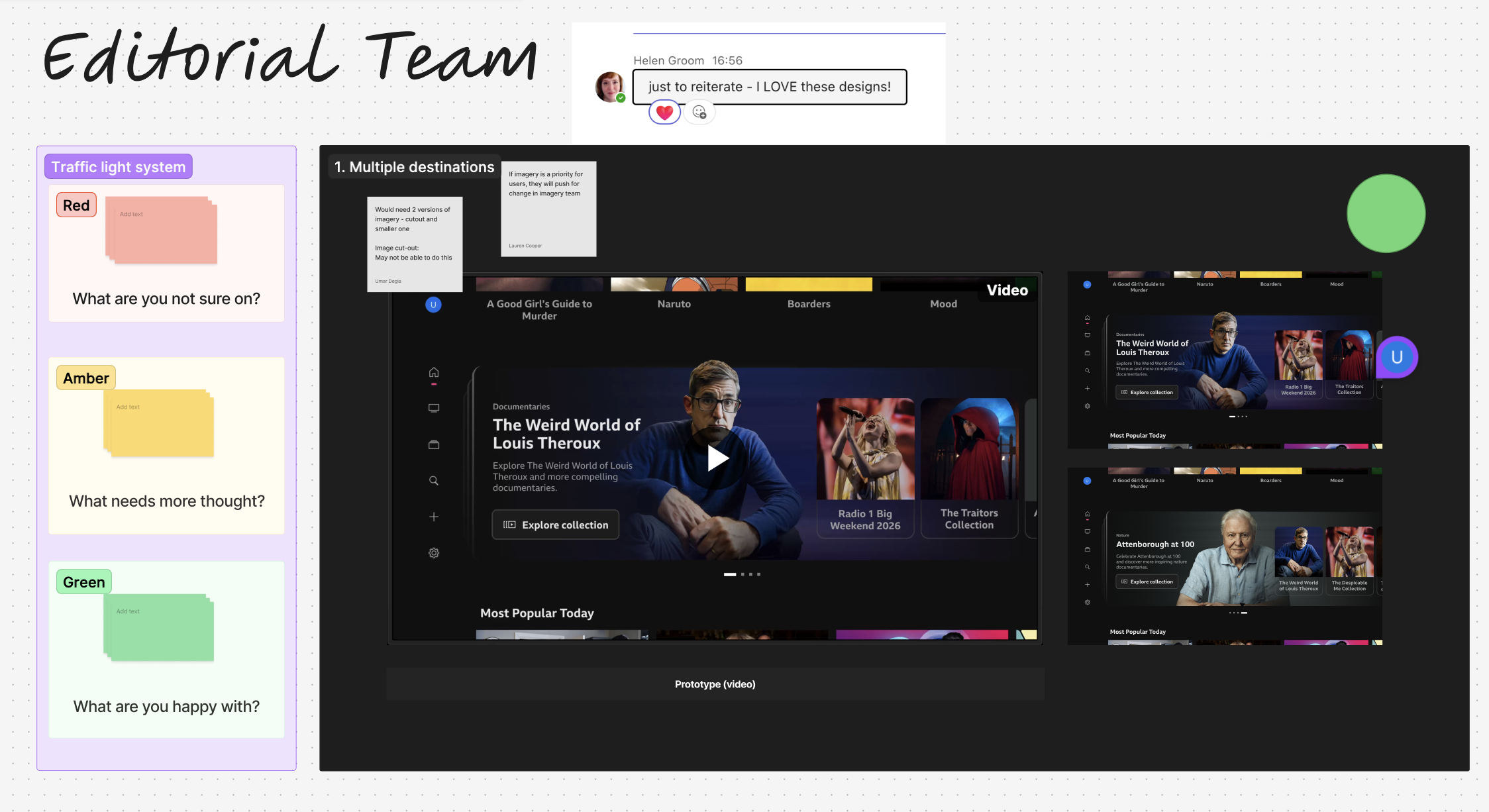
We took those findings into cross-disciplinary workshops, exploring what different destinations genuinely needed, what could share a common framework and where specialist treatment was required.
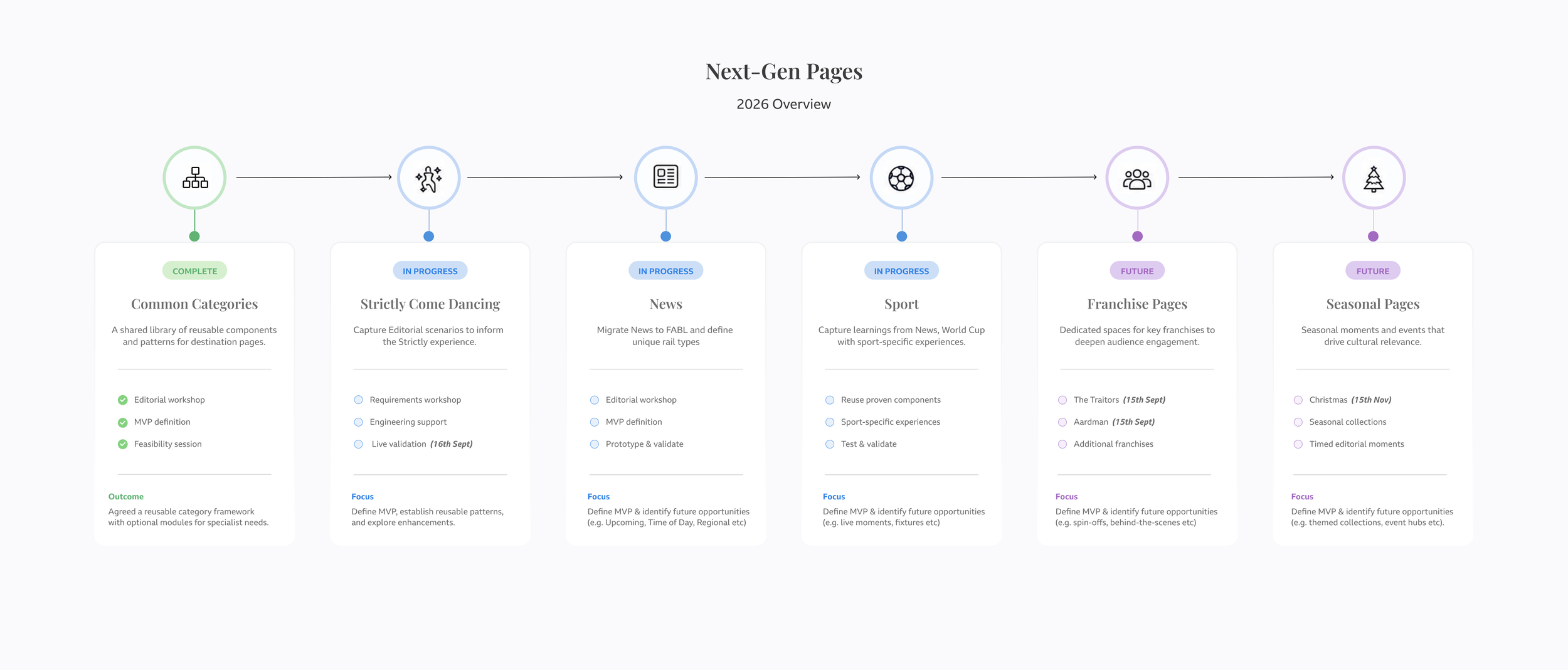
The strongest finding was that there was significantly more commonality than difference. That gave us the confidence to move away from bespoke pages towards a configurable discovery framework that could flex across genres, franchises, collections and major events.
My role increasingly became connecting these workstreams — framing them around a shared audience problem and aligning Research, Editorial, Product and Engineering around a broader discovery model.
What we delivered:
We developed a flexible discovery framework that could adapt across very different propositions — from Attenborough at 100 and Films to the World Cup and major franchises.
For Attenborough at 100, this meant moving beyond traditional programme rails to create thematic pathways through more than 60 titles, combining stronger editorial storytelling with opportunities for deeper exploration. In our Films Beta, the same foundations allowed us to increase the catalogue available from 84 to more than 220 items.
But building richer destinations exposed another problem:
How would audiences know they were there?
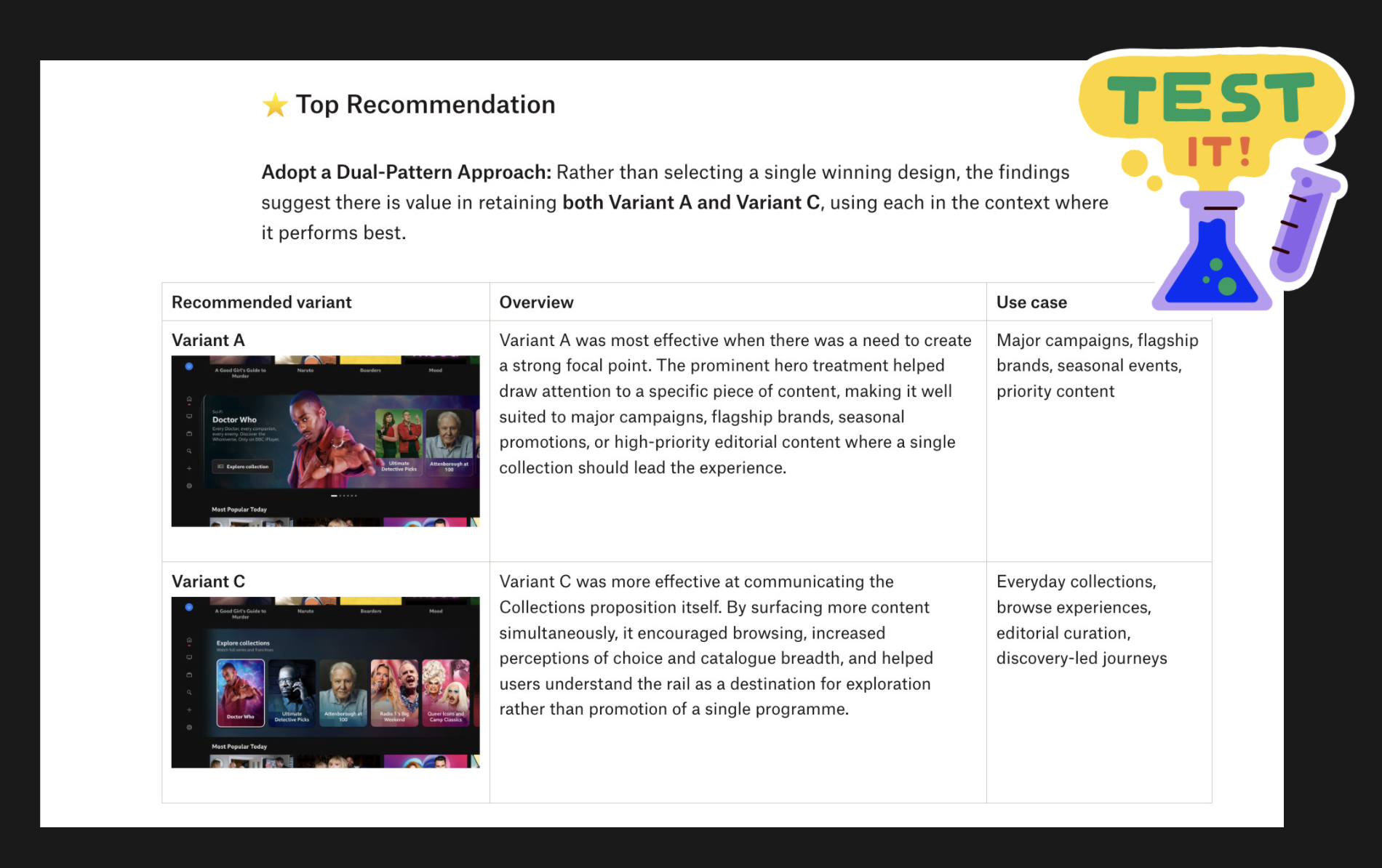
We began exploring Routes Into Discovery — using collections on the iPlayer homepage as gateways into these richer experiences, rather than simply promoting individual programmes.
Our first live Abundance Rail experiment surfaced seven curated collections, including The Traitors and Louis Theroux, testing whether stronger signals of scale, variety and continuation could encourage audiences to move deeper into iPlayer.
Together, this connected two sides of the same discovery problem: building better places to explore, and better ways to find them.
Reaction
Early signals across the work have been encouraging.
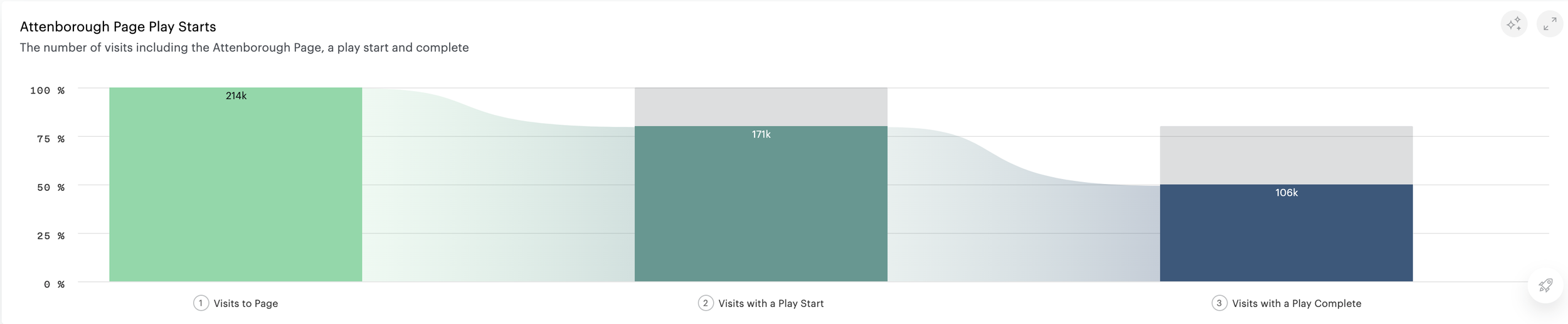
For Attenborough at 100, 80% of visits converted to a play start — 16 percentage points higher than the wider documentary rate of 64%. The Hero also drove 47% of all clicks, suggesting strong editorial framing helped audiences make viewing decisions.
Our Routes In experiment revealed a different behaviour. While homepage exploration fell, overall exploration remained essentially unchanged and collection/group-page play starts increased by 49%.
Discovery hadn't decreased. We'd changed where it happened. The emerging journey shifted from:
Homepage → Play
to:
Homepage → Collection → Content → Play
Together, these results give us growing confidence that richer destinations and stronger routes into them can encourage deeper exploration across iPlayer.
Reflections
For me, one of the most important learnings has been that abundance alone isn't discovery. Giving audiences more choice only becomes valuable when the way it's framed, grouped and connected gives them the confidence and curiosity to explore it.
The work has also shifted my thinking from individual pages and components towards the journeys between them — and how seemingly separate product problems can form part of the same audience experience.
The opportunity isn't simply to show audiences more. It's to create journeys that make them want to keep exploring.